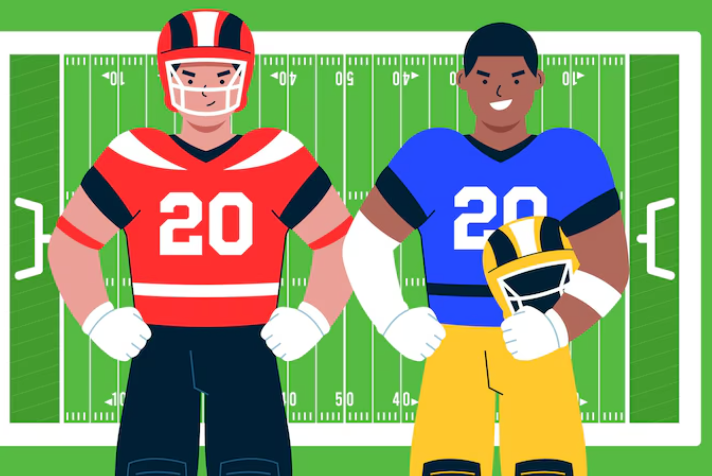








American football is one of the most iconic sports in the United States. But have you ever wondered: why is it called "football" when the game mostly involves throwing and carrying the ball? The answer lies in a fascinating mix of history, language, and cultural evolution. In this article, we explore the true origins of American football, its connection to rugby and soccer, and how the name stuck despite its apparent contradiction. Along the way, we’ll also explore how understanding the sport's roots can enhance your appreciation for american football rules, gameplay—and even help with smarter american football betting on modern bitcoin sportsbook platforms.
⚽ The Word “Football” and Its Early Meaning
The term "football" dates back centuries and originally described any game played on foot—as opposed to on horseback. In medieval Europe, "football" could mean a wide range of games involving a ball, some of which involved kicking, carrying, or even hitting the ball with the hand. The word was more about how the game was played (on foot) than the specific actions involved.
As the rules of sports evolved in England during the 19th century, “football” became associated with two distinct games: association football (today known globally as “soccer”) and rugby football. The divergence between these two laid the foundation for what would later become American football.
🏈 How American Football Evolved from Rugby
In the late 1800s, American colleges began playing a version of rugby imported from Britain. However, American teams gradually introduced their own innovations—most notably led by Walter Camp, widely regarded as the "Father of American Football."
Camp introduced crucial changes like the line of scrimmage, the system of downs, and the snap between center and quarterback. These rule changes shifted the game from a rugby-style brawl into a uniquely strategic sport. As the game evolved, the shape of the american football ball also changed—becoming elongated for easier throwing, further reducing the role of the foot.
📌 So Why Keep the Name “Football”?
Despite the reduced use of the foot, the name “football” persisted in the United States for several reasons:
- Tradition: The early games were seen as a continuation of rugby football.
- National Identity: As the sport gained popularity in the U.S., the name “football” became synonymous with the American version.
- Linguistic Ownership: In the U.S., "football" became a term culturally defined by its local version, while "soccer" was used to describe association football.
Over time, American football became a sport with its own identity and terminology—distinct from both rugby and soccer—yet the name remained, cementing its place in American culture.
📜 Connection to Rules and Betting Culture
Understanding the historical roots of the game provides greater context to modern american football rules. For instance, the importance of downs, field positioning, and the quarterback role all stem from Camp’s modifications of rugby. These concepts are essential to grasping game flow—and crucial for evaluating american football odds in both traditional and crypto betting environments.
Bettors who understand the strategic layers of football—its origin, terminology, and mechanics—are better positioned to read live games, assess coaching decisions, and wager more accurately on american football betting markets.
📺 Modern Popularity and the Name Debate
Today, "football" means different things in different parts of the world. In most countries, it refers to soccer. In Canada, it's a mix of American and Canadian football. In the United States, it means the gridiron game. Though some debate the appropriateness of the name, there’s no denying that American football has defined its own legacy.
Major broadcasts, fantasy leagues, and bitcoin sportsbook betting platforms like TrustDice have amplified the sport’s reach globally. And with fans around the world tuning in, even the terminology is now part of its international intrigue.
📊 Quick Comparison: American Football vs. Soccer
| Aspect | American Football | Soccer |
|---|---|---|
| Use of Feet | Occasional (kicks, punts) | Primary mode of play |
| Ball Shape | Oval | Round |
| Scoring | Multiple ways (TD, FG, safety) | Goal = 1 point |
| Number of Players | 11 per side | 11 per side |
| Global Terminology | “Football” (U.S. only) | “Football” globally |
🎯 What This Means for Bettors
For those involved in betting with bitcoin, understanding the terminology and strategic structure of American football can be the difference between casual wagering and informed investment. It’s not just about the odds—it’s about knowing the rules, the flow, and the evolution of the sport.
Whether you're placing live bets on touchdowns, predicting passing yards, or analyzing timeouts on a crypto sportsbook, context is everything—and historical understanding gives you an edge.
📣 Conclusion: A Name Built on Legacy
So why is it called American football? Because it grew from the same tree as rugby football, took root in American colleges, evolved through strategic innovation, and created a game that earned its own definition of the word “football.” The name stuck—not just because of tradition, but because of identity.
Today, whether you're watching from the stands or placing real-time bets through a bitcoin sportsbook, you're engaging with a sport built on history, precision, and evolution. The name may raise eyebrows worldwide—but in the U.S., "football" is more than a game. It’s a national language. 🏆📘